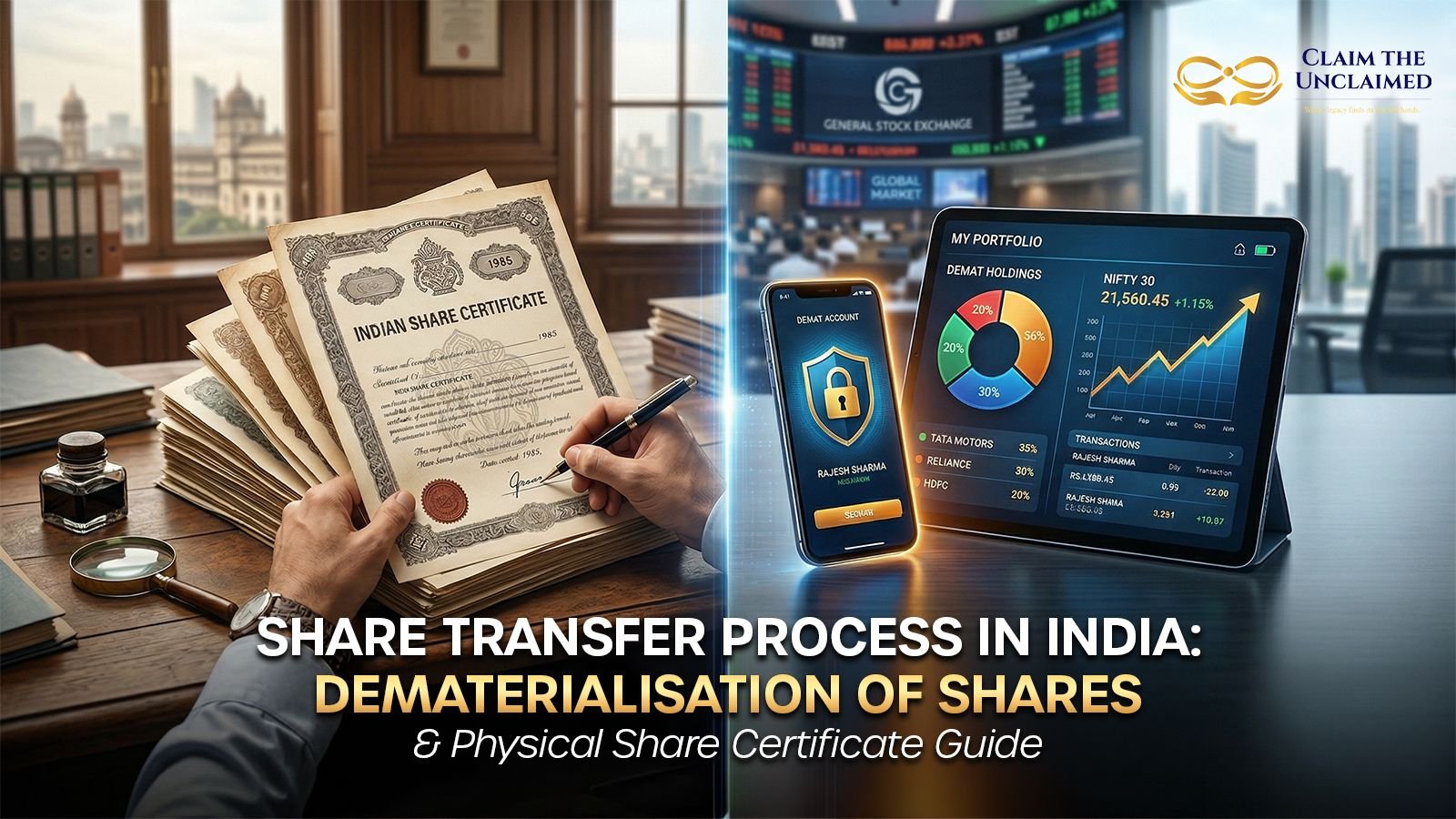
Managing investments efficiently is crucial, especially when dealing with physical share certificates and unclaimed assets. In India, the Share Transfer Process in India has evolved significantly with the introduction of digital systems like Dematerialisation of Shares, making it easier, safer, and faster for investors.
What is Dematerialisation of Shares?
Dematerialisation of Shares refers to converting physical share certificates into electronic form. This process eliminates risks like theft, loss, or damage of physical documents and ensures seamless transactions through a Demat account.
Today, SEBI mandates that most share transfers can only be processed in dematerialized form, making it essential for investors holding physical shares to convert them.
Understanding the Share Transfer Process in India
The Share Transfer Process in India depends on whether shares are held in physical or electronic form:
1. Transfer of Physical Shares
- Submission of a duly signed share transfer deed (Form SH-4)
- Original share certificates must be attached
- Payment of stamp duty (as per state regulations)
- Submission to the company or registrar
However, physical share transfers are now restricted, and only transmission (in case of inheritance) is allowed.
2. Transfer of Dematerialised Shares
- Shares are transferred electronically via a Demat account
- No paperwork or stamp duty required in most cases
- Faster and more secure transactions
Why Convert Physical Shares to Demat?
- Eliminates risk of loss or forgery
- Faster share transfer and settlement
- Easy tracking of investments
- Mandatory compliance with SEBI regulations
If you still hold physical certificates, initiating the Dematerialisation of Shares process is highly recommended.
Common Challenges Investors Face
- Missing or damaged share certificates
- Signature mismatch issues
- Unclaimed dividends or shares
- Lack of awareness about the correct procedure
Platforms like Claim The Unclaimed help investors recover and convert such holdings efficiently.
Conclusion
Understanding the Share Transfer Process in India and opting for Dematerialisation of Shares ensures secure and hassle-free investment management. With regulatory changes favoring digital transactions, converting physical shares is no longer optional—it’s essential.
FAQs
1. Is it mandatory to dematerialise shares in India?
Yes, SEBI has made it mandatory for most share transfers to happen only in Demat form.
2. Can I still transfer physical share certificates?
No, transfer of physical shares is largely restricted. Only transmission (inheritance cases) is allowed.
3. How long does the dematerialisation process take?
It typically takes 7–15 working days, depending on verification.
4. What documents are required for dematerialisation?
You need physical share certificates, a Demat account, and a Dematerialisation Request Form (DRF).
5. What if my shares are lost or unclaimed?
You can recover them through proper legal and financial procedures with expert assistance.